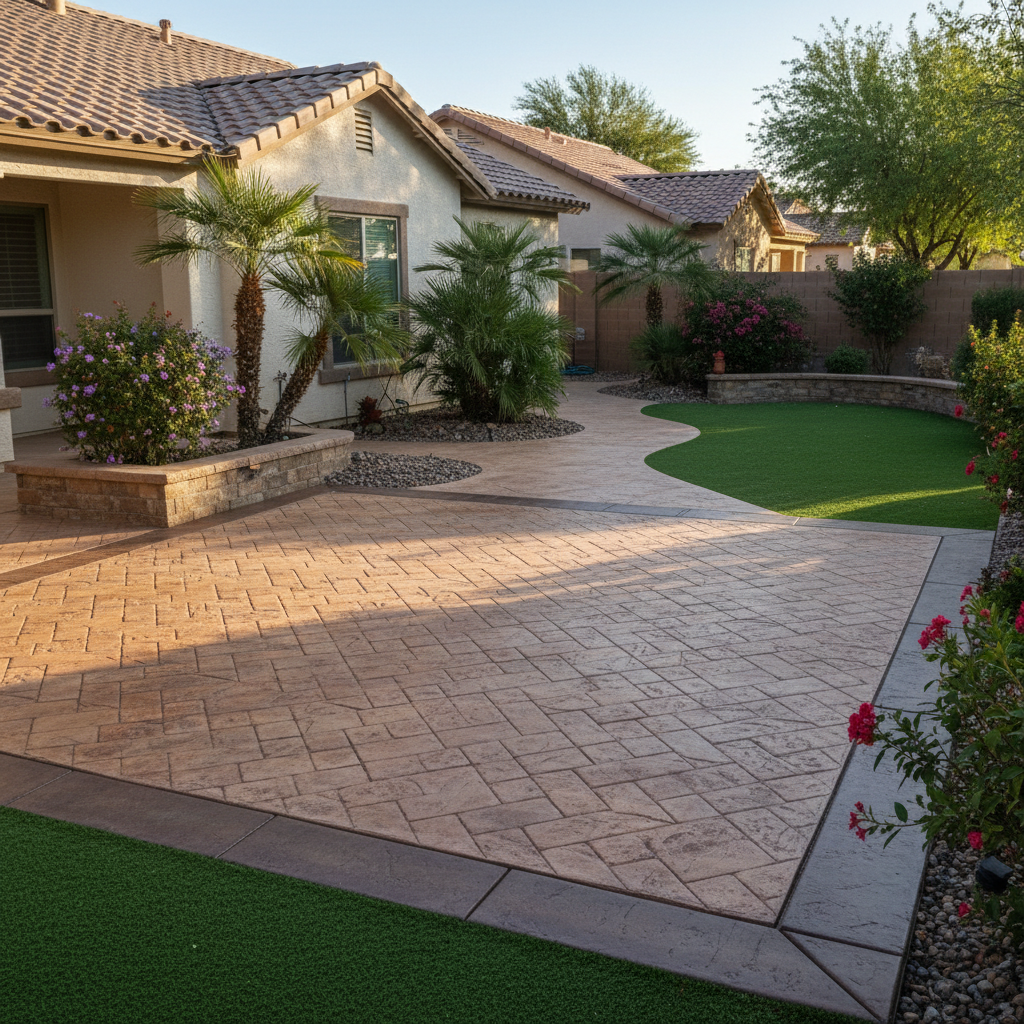
Thinking about decorative concrete for your place? Maybe a cool new stamped patio or a stained driveway that really pops? That's a smart move, honestly. It adds a ton of curb appeal and can totally transform how a space feels. But here in Glendale, you can't just pick any old day to pour and expect the best results. Our desert climate plays a huge role in how decorative concrete cures, how it looks, and how long it lasts.
When to Schedule Your Decorative Concrete Project
So, when's the best time to get this kind of work done? Really, it's all about staying away from the extremes. Our summers are brutal, everyone knows that, and while our winters are mild, you still need to be smart about scheduling.
- Fall (October - November): This is prime time, no doubt about it. Temperatures usually hit that sweet spot – not too hot during the day, and nights are cool but not freezing. The concrete cures slower and more evenly then, which is exactly what you want for decorative finishes like stamping or staining. You get better color consistency and less risk of surface cracking from drying out too fast.
- Spring (March - May): Another great window. Just like fall, you'll find good, moderate temperatures. You just have to watch out for those early heat waves that can sneak up on us, or maybe some unexpected late-season rain.
- Winter (December - February): It *can* work, but you really need to be careful. While we don't get much frost, those overnight lows can dip into the 30s. If it's too cold, the concrete takes forever to set and cure, and you risk it freezing before it gets strong enough. That's a recipe for weak, crumbly concrete down the road, and nobody wants that. If we do pour in winter, we're usually adding accelerators to the mix and sometimes even using blankets to keep the slab warm enough. It's more work, and frankly, it's usually better to just wait for warmer weather if you have the option.
- Summer (June - September): This is the toughest time, period. I'm talking 110-degree days, sometimes even hotter. When it's that hot, concrete dries way too fast. That can lead to plastic shrinkage cracking, and it's incredibly hard to get a consistent finish, especially with intricate stamping or staining. The water in the mix evaporates almost instantly, making it tough to work the surface properly. We *can* do it, sure, but it means a lot of extra measures like misters, sun shades, and working super early in the morning. All that adds to the cost and complexity, so if you have the flexibility, definitely avoid summer for decorative work.
Weather Conditions That Impact the Work
It's not just the temperature; a few other things affect how your decorative concrete turns out, too:
- Humidity: Low humidity, which we have a lot of here, means water evaporates faster. This is exactly why our summer pours are so tricky. Higher humidity actually helps the concrete cure slower and stronger.
- Wind: A strong breeze, even on a moderate day, can dry out the surface of fresh concrete way too quickly. This can cause surface cracking and make it hard to achieve a smooth or properly stamped finish. We've seen it happen in neighborhoods like Yucca District where there's less tree cover to block the wind, if you know what I mean.
- Rain: Obvious, right? You can't pour concrete in the rain. It washes out the cement paste, weakens the mix, and can ruin the finish. If there's rain in the forecast, we'll reschedule, no question.
Protecting Your Decorative Concrete Investment Year-Round
Once your decorative concrete is in, you want it to look good for years. Here's how to keep it that way:
- Sealing is Key: This is non-negotiable for decorative concrete, especially if it's stained or stamped. A good quality sealer protects against UV rays (which can fade colors, by the way), stains, and just general wear and tear. You'll want to reapply it every 2-3 years, depending on how much traffic it gets and how much sun it sees. Think of it like sunscreen for your concrete.
- Clean Regularly: Sweep off dirt, leaves, and debris. For tougher spots, a mild detergent and a stiff brush usually do the trick. Just avoid harsh chemicals or pressure washing too aggressively, as that can damage the sealer or even the concrete surface itself.
- Watch for Heavy Loads: Try not to park super heavy vehicles or equipment on your decorative driveway if it wasn't designed for that kind of weight. Over time, that kind of stress can lead to cracks.
- Address Spills Quickly: Oil, grease, or chemical spills should be cleaned up fast, especially before they have a chance to penetrate the sealer and stain the concrete.
Getting decorative concrete is a fantastic way to upgrade your Glendale home. Just make sure you're thinking about the timing and the weather. When you work with pros who understand our local conditions, like us at Kingdom Concrete Glendale, you'll get a beautiful, durable finish that lasts. Give us a call when you're ready to talk about your project; we'll make sure it's done right.