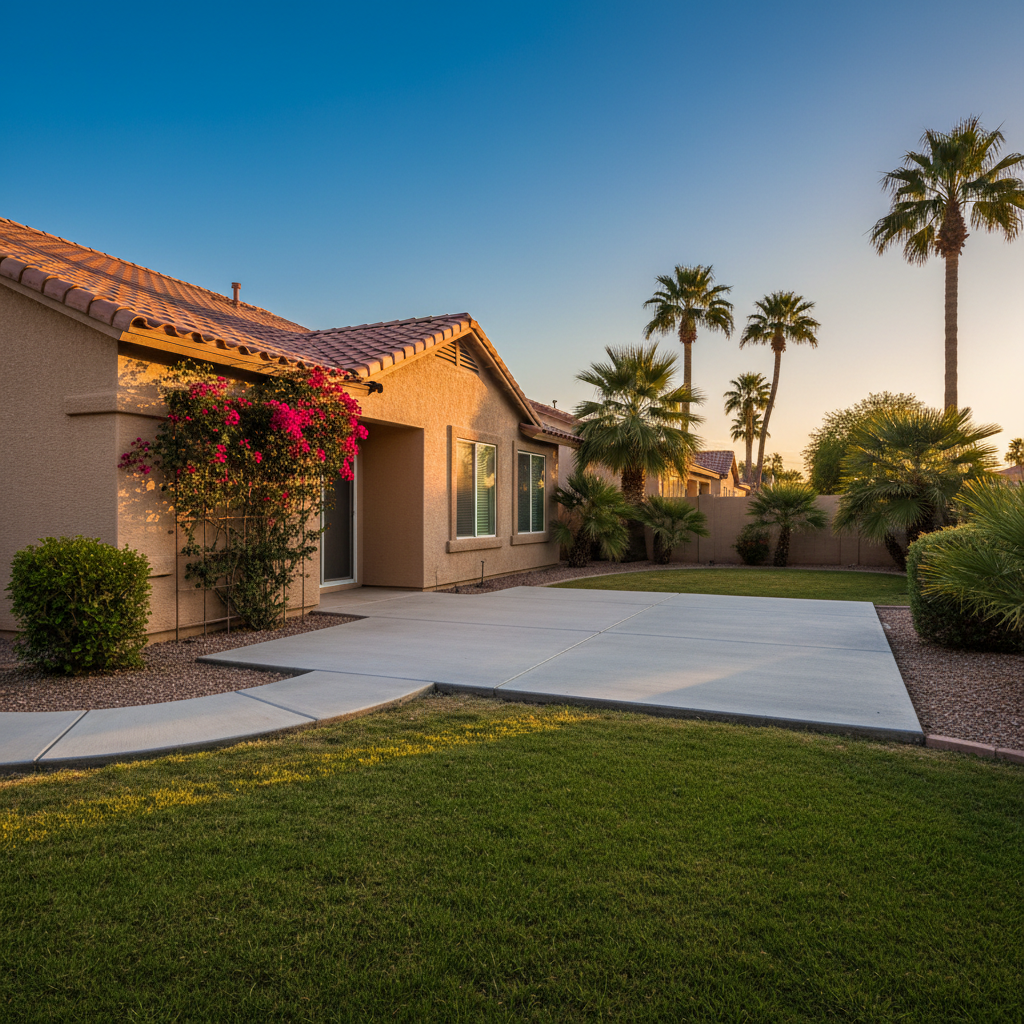
Alright, let's talk concrete here in Glendale. You've got a driveway, a patio, maybe some pathways around your house. You want that stuff to last, right? Of course you do. But out here in the Sonoran Desert, our weather isn't exactly gentle on concrete. It's not like back east where you worry about freeze-thaw cycles all winter. We've got our own unique challenges, and knowing them can save you a lot of headache and money down the road.
When's the Best Time to Pour Concrete in Glendale?
This is probably the most common question I get, and it's a good one. You might think summer's great because it's hot and things dry fast. And while concrete does need warmth to cure properly, too much heat, especially that brutal Glendale summer sun, can actually be a problem. When it's 110 degrees out, water evaporates from the mix way too fast. That leads to issues like plastic shrinkage cracking, which are those fine, spiderweb cracks you sometimes see. It also makes it harder to get a smooth, durable finish.
So, what's the sweet spot? For us, it's generally the cooler months. Think late fall, winter, and early spring. October through April is usually ideal. The temperatures are moderate, the humidity isn't too low, and the concrete has a chance to cure slowly and strongly. You'll get a much better product that way. We've done plenty of jobs in the heat, but it requires a lot more work, like using retarders in the mix and constant misting, which adds to the cost and complexity. If you can wait, wait for the cooler weather.
Weather Conditions That Affect Your Concrete Pour
Beyond just the temperature, there are a few other things we're always watching when we're pouring concrete:
- Extreme Heat: Like I said, this is our biggest enemy. It accelerates the hydration process too much, reducing strength and increasing cracking potential. We're talking anything consistently over 95-100 degrees.
- Wind: Even on a mild day, a strong breeze can dry out the surface of fresh concrete too quickly, leading to surface cracks. We'll often put up windbreaks or use curing compounds to combat this.
- Rain: This one's a no-brainer. You can't pour concrete in the rain. It dilutes the mix, washes away the cement paste, and completely ruins the strength and finish. If there's rain in the forecast, we're rescheduling.
- Low Humidity: Our desert air is often super dry. This, combined with heat or wind, can suck the moisture right out of the concrete, which is exactly what you don't want during the initial curing phase.
We're always checking the forecast, sometimes hourly, before and during a pour. It's all about getting the conditions just right for a quality job. You don't want us rushing because the weather's turning, and we don't want to either.
Protecting Your Concrete Investment Year-Round
Once your concrete's in and cured, you're not entirely off the hook. To make sure it lasts for decades, especially with our Glendale sun beating down, here's what you should be doing:
- Sealing: This is probably the most important thing you can do. A good quality concrete sealer protects against moisture penetration, stains, and UV damage. Our intense sun can really fade and degrade unsealed concrete over time. I recommend sealing your concrete every 2-3 years, depending on the type of sealer and how much traffic it gets. It's like sunscreen for your concrete.
- Regular Cleaning: Don't let dirt, oil, or other spills sit on your concrete. Sweep it regularly, and if you get a spill, clean it up quickly. A simple pressure washing once a year can do wonders, but be careful not to use too high a pressure setting, especially on older concrete, as it can damage the surface.
- Watch for Cracks: Small cracks can appear over time; it's pretty normal with concrete. But if you see them getting bigger, or if you notice any uneven settling, don't ignore them. Sometimes a small repair can prevent a much bigger, more expensive problem down the line. Especially with our expansive clay soils around areas like the Catlin Court Historic District, ground movement can put stress on slabs.
- Avoid Harsh Chemicals: Be careful with de-icers (not that we need them often here!) or strong cleaning chemicals, as they can degrade the concrete surface. Stick to mild detergents and water for most cleaning.
Taking care of your concrete isn't rocket science, but it does require a little attention, especially with our unique desert climate. A well-maintained concrete surface not only looks better but also adds value to your home. If you've got questions about your concrete or need some work done, you know who to call. Kingdom Concrete Glendale is always ready to help you keep your investment solid.