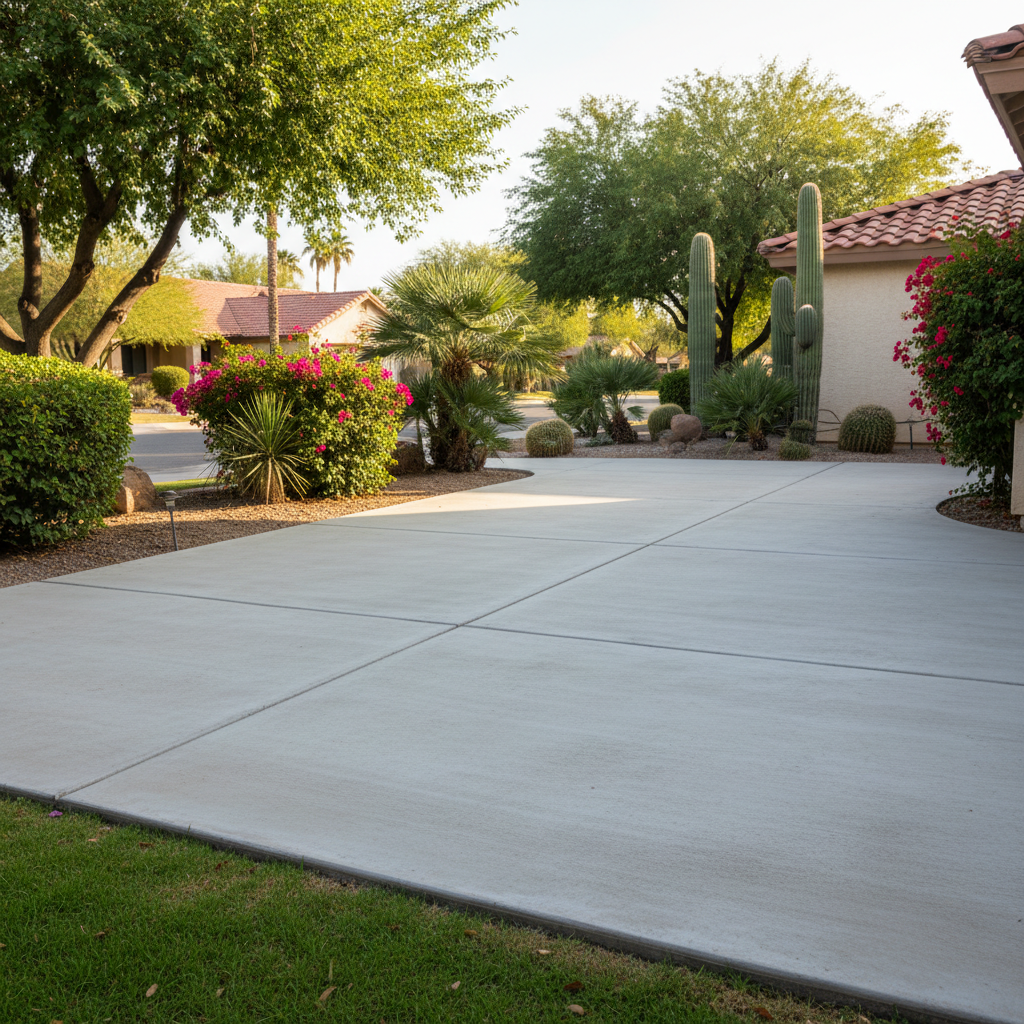
You've put good money into your concrete driveway, patio, or walkways. You want that stuff to last, right? Especially here in Glendale, where the sun bakes everything for half the year and those monsoon rains can really test your drainage. I've seen a lot of concrete come and go in this town, and believe me, a little bit of care goes a long way.
Extending the Life of Your Concrete
The biggest enemy of concrete in Arizona isn't usually freezing and thawing cycles, like you'd find up north. No, it's the sun, the heat, and those sudden downpours. That constant expansion and contraction from temperature swings, plus all the UV exposure, can really take a toll. So, here's what you can do to fight back:
- Seal it up: This is probably the most important thing you can do, especially for new concrete. A good quality sealer acts just like sunscreen for your concrete. It protects against UV rays, helps repel water, and makes it harder for oil stains to really set in. I usually tell folks to reseal every 2-3 years, but that depends on how much traffic it gets and how much sun it sees. If you've got a busy driveway or a patio that's in direct sun all day, you might want to do it more often.
- Clean up spills fast: Oil, grease, rust, even spilled drinks – they can all stain concrete if you leave them too long. And the hotter it is, the faster they'll set. Keep a bag of absorbent material like cat litter or sawdust handy for oil spills, then clean it with a good degreaser.
- Mind your landscaping: Tree roots can be a real menace to concrete, especially if they're close to the surface. I've seen mesquite roots crack perfectly good driveways in older neighborhoods like the Yucca District. Keep an eye on any trees or large shrubs near your concrete and consider root barriers if you're planting new ones.
Regular Maintenance: It's Not Rocket Science
Maintaining your concrete isn't a full-time job, but a little routine care will save you headaches down the road. You're not going to be out there with a toothbrush, don't worry.
- Sweep it regularly: Get rid of dirt, leaves, and other debris. This stops organic matter from breaking down and staining the surface, and it keeps grit from wearing down the sealer.
- Hose it down: A good rinse with a garden hose once a month, or more often if it gets dusty, is usually enough. For tougher dirt, a stiff brush and some mild detergent will do the trick. Just make sure it's a non-acidic cleaner.
- Power wash with caution: A pressure washer can be great for a deep clean, but you've got to use it right. Too much pressure, or holding the nozzle too close, can actually damage the concrete surface or strip your sealer. Use a wide fan tip and keep it moving. If you're unsure, just stick to the hose and brush.
Warning Signs: Don't Ignore These
Your concrete will tell you when it's not happy. You just gotta know what to look for. Catching these issues early can prevent a small fix from becoming a major repair.
- Cracks: Hairline cracks are pretty normal, especially in our climate. Concrete expands and contracts, and sometimes it cracks. But if you see cracks that are wider than a credit card, or if they're starting to spiderweb, that's a sign of potential trouble.
- Spalling or flaking: This is when the surface of the concrete starts to peel or flake off. It often looks like the top layer is coming apart. Poor installation, improper curing, or even harsh chemicals can cause this.
- Discoloration or persistent staining: If your concrete is looking splotchy, unevenly faded, or you have stains that just won't come out, your sealer might be gone, or there could be issues with moisture.
- Uneven surfaces: If one slab is higher than another, or if you notice dips and bumps, that could mean the ground underneath is shifting. This is a bigger deal and can be a tripping hazard.
When to Call a Pro (Like Us!)
Look, I'm a concrete guy, so of course I'm going to tell you to call a pro sometimes. But seriously, there are times when DIY just isn't the answer, and trying to fix it yourself can make it worse or cost you more in the long run.
- Major cracking or structural issues: If you've got those wide cracks, or if slabs are shifting significantly, you need an expert to assess the underlying cause. It could be a drainage problem, soil movement, or even an issue with the base.
- Extensive spalling or surface damage: If a large area of your concrete is flaking or deteriorating, it might be beyond a simple patch job. We can often resurface or repair it, but it needs to be done right.
- Drainage problems: If water is pooling on your concrete, or running towards your foundation, that's a big red flag. We can evaluate the grading and suggest solutions to protect your home.
- You're just not sure: If you see something weird and you're scratching your head, give us a call at Kingdom Concrete Glendale. We're happy to come out, take a look, and give you an honest opinion. Sometimes it's nothing, sometimes it's something that needs attention. Better safe than sorry, right?
Taking care of your concrete isn't just about making it look good; it's about protecting your investment and ensuring it lasts for decades. A little proactive maintenance now can save you a lot of money and hassle later.