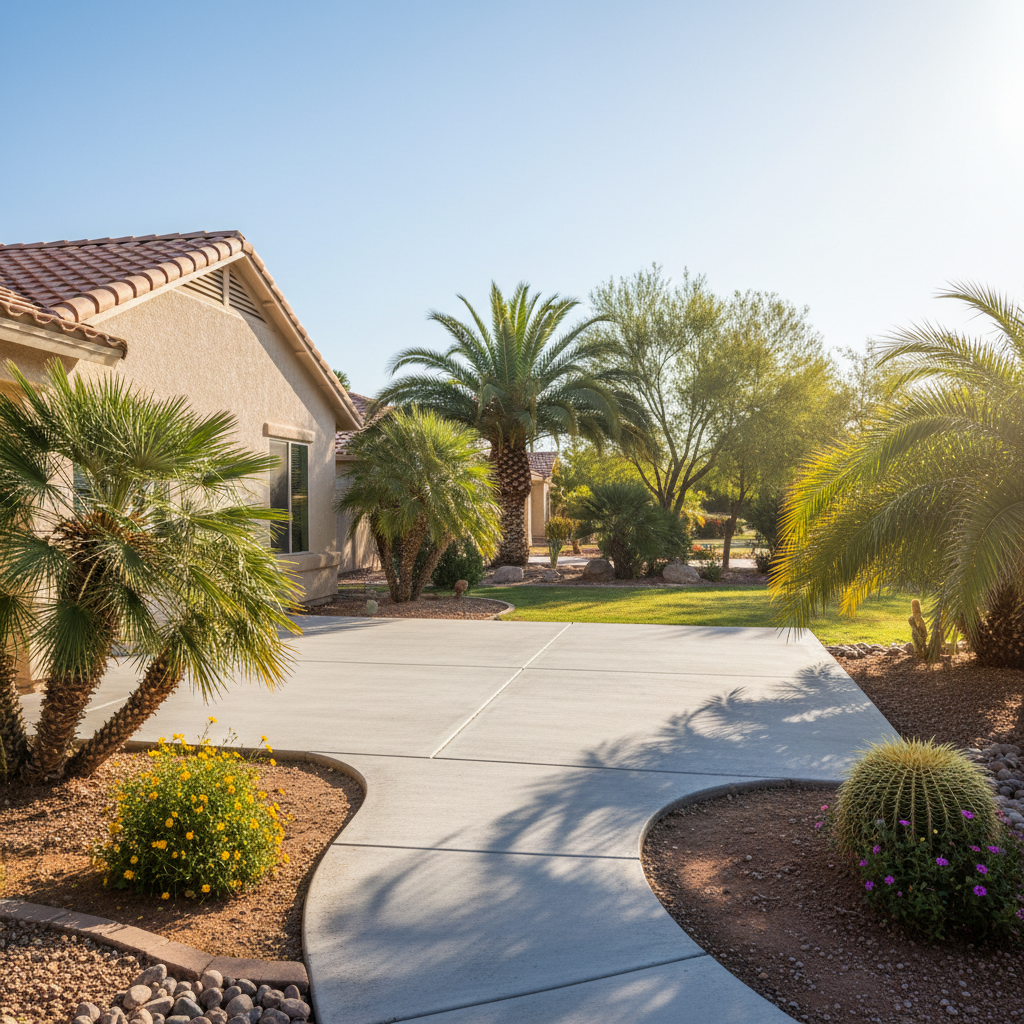
Desert living changes the rules when working with concrete. Here in Glendale, AZ, the intense summer heat and dry air mean you cannot just treat a patio or driveway the same way people do in cooler climates. If you are planning a new project or trying to keep your existing flatwork from cracking under the pressure, timing and year-round maintenance are very important.
How the Glendale Climate Affects Concrete Work
Our local weather brings two major challenges: scorching summer temperatures and very low humidity. When you pour concrete in the middle of a June or July afternoon, the extreme heat causes the water to evaporate way too fast. That rapid moisture loss stops the chemical curing process dead in its tracks, leaving you with weak spots, shrinkage, and ugly surface cracks.
That is why Kingdom Concrete Glendale always adjusts our schedule when the mercury climbs. Pouring usually happens at the crack of dawn during the summer months. Getting the mix down while it is still cool gives the material a fighting chance to set properly before the peak heat hits.
Scheduling Your Project Around the Seasons
Timing your project right saves you headaches and money down the road. Here is what you need to keep in mind:
- Spring and fall offer the most forgiving weather windows for larger pours and decorative work.
- Summer requires pre-dawn starts, specialized admixtures to slow down setting times, and immediate curing compounds.
- Monsoon season brings sudden humidity spikes and flash downpours that can pit a fresh surface if you do not have plastic sheeting ready to deploy.
- Winter brings mild days that are fantastic for pouring, though you still have to watch out for occasional chilly desert nights.
Protecting Your Investment Year-Round
Pouring the concrete is only half the battle. Once it is down, keeping it intact in our alkaline Glendale soil requires a little ongoing attention. Expansive clay soils throughout the Valley can shift and put stress on slabs, so proper drainage around your foundation and flatwork is a must.
Make sure you are sealing your concrete every 2 to 3 years. A good penetrating sealer blocks out moisture and helps reflect those harsh UV rays that bake the surface day after day. If you spot a hairline crack, do not wait for it to get bigger before you fix it. Patch it early, keep the surface clean, and your concrete will easily outlast the desert elements.