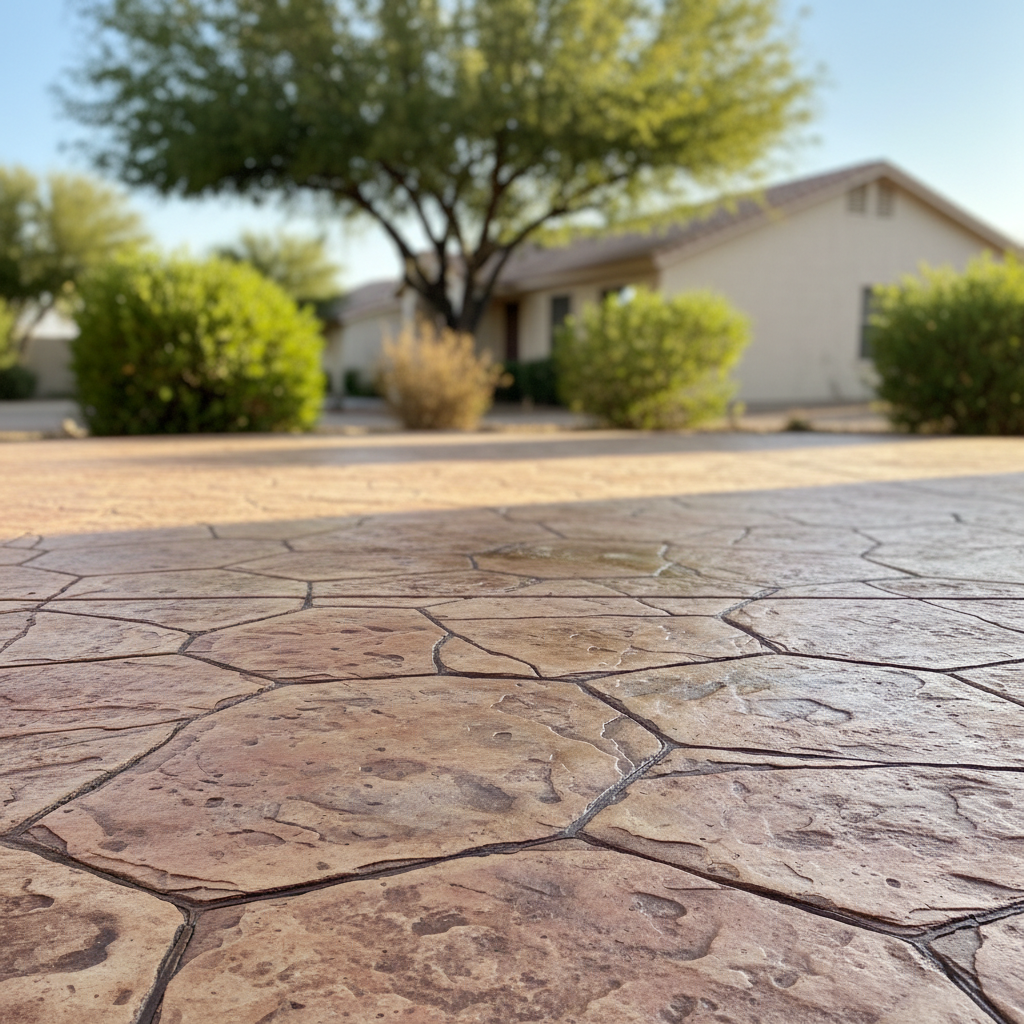
So, you're thinking about stamped concrete, huh? It's a great choice, really, for adding some serious curb appeal and functionality to your place—whether it's a new patio, walkway, or even a driveway. But before you dive in, you gotta know what you're getting into. I've seen a lot of folks in Glendale try to tackle this themselves. Sometimes it works out, sometimes it doesn't. Let's talk about what you need to know before, during, and after the project, and where that line is between DIY and calling in a pro.
Before You Even Think About Pouring
Planning is probably the most important part of any concrete job, especially stamped concrete. You can't just wing it. First off, what's this concrete for? Is it a light-traffic patio or a heavy-duty driveway? That'll dictate your concrete mix and slab thickness. You'll need to figure out the exact dimensions, and I mean *exact*. And don't forget about drainage. Glendale gets those monsoon downpours, you know? You definitely don't want water pooling up against your house or in low spots. Proper grading is crucial – you want a slight slope away from any structures.
Next up: design. This is where stamped concrete really shines. There are tons of patterns and colors out there. Think about your home's style and what'll complement it. Do you want something that looks like flagstone, brick, or maybe even wood planks? Get some samples, look at pictures, and really visualize it. This isn't something you can easily change once it's poured, after all.
Now, permits. Depending on the size and location of your project, you might need one from the City of Glendale. Don't skip this step. Fines are a pain, and you might even have to tear out work if it's not up to code. Check with the city's planning department. They'll tell you what's what.
Can you do this part yourself? Absolutely! Measuring, planning the layout, choosing patterns and colors, even checking permit requirements – that's all homeowner territory. You should be heavily involved in these decisions, even if you hire a pro.
The Nitty-Gritty: Project Execution
Alright, this is where things get serious. Pouring and stamping concrete isn't like painting a wall. It's a race against the clock, especially here in Arizona. That concrete sets fast when it's 100+ degrees out. You've got to be prepared, and you've got to be quick.
Here's a simplified breakdown of the steps:
- Site Prep: This means digging out the area, making sure the subgrade is compacted properly, and installing your forms. You need a solid, level base. If your soil is that hard caliche we often see around Glendale, you'll need to break it up and compact it right.
- Rebar/Mesh: For strength and crack control, you'll need rebar or wire mesh. Don't skimp on this.
- Pouring: The concrete truck shows up. You've got to get that concrete from the truck into your forms evenly and quickly.
- Screeding & Floating: This is leveling the concrete and bringing the cream to the surface. It takes practice to get it smooth.
- Coloring & Stamping: If you're using integral color, it's already in the mix. If it's a broadcast color hardener, you're throwing it on and floating it in. Then, when the concrete is at the right consistency – not too wet, not too dry – you start laying down those stamping mats. This is where timing and technique are everything. You need to apply consistent pressure, make sure the patterns line up, and work fast before it sets.
- Curing: Once it's stamped, you need to cure it properly. This usually involves keeping it moist for several days to allow it to gain strength.
Now, for the DIY vs. Pro question during this phase: Site prep, digging, setting forms – a handy homeowner can probably tackle this, especially for smaller projects. But pouring, screeding, floating, and especially stamping? That's where I'd strongly recommend calling in a professional. Stamping concrete is an art and a science. It requires specialized tools, experience, and a crew that knows how to work together quickly. One mistake, and you've got a permanent, ugly patch. For something like a 10x10 patio, maybe you could try it with a few experienced friends, but for anything bigger or more complex, you're asking for trouble. Kingdom Concrete Glendale has done enough of these jobs to know the difference between a good stamp and a bad one, and trust me, you want a good one.
After the Concrete's Down: Maintenance & Care
So, you've got your beautiful new stamped concrete. Great! But the job isn't over. You need to protect that investment. The most important thing here is sealing. Stamped concrete needs to be sealed to protect it from stains, UV damage (that Arizona sun is brutal!), and general wear and tear. You'll typically apply a sealer a few weeks after the pour, once the concrete has fully cured. You'll need to reapply that sealer every 1-3 years, depending on traffic and sun exposure. You'll know it's time when water stops beading up on the surface.
Cleaning is pretty straightforward. A good sweep to get rid of debris, and then a wash with a mild detergent and water. You can use a pressure washer, but be careful not to use too high a pressure setting, especially on older or less-sealed concrete, as you can damage the surface or strip the sealer.
Cracks happen. Concrete cracks; it's just what it does. Control joints are put in place to encourage cracks to form in specific, less noticeable lines. If you see hairline cracks, don't panic. Most aren't structural. If you get wide, uneven cracks, that might be a sign of a subgrade issue or poor installation, and that's when you might want a professional opinion.
Can you handle the aftercare yourself? Absolutely! Sealing, cleaning, and general observation are all things you can and should do as a homeowner. It's not rocket science, but it is important for keeping your stamped concrete looking good for years to come.
Ultimately, stamped concrete can dramatically improve your home. Just be realistic about your skills and the demands of the job. For the heavy lifting and the intricate stamping, hiring a pro usually pays off in the long run. You get a quality finish that lasts, and you don't have to spend your weekend stressing about concrete setting too fast in the Glendale heat.